Push Ups
Push-ups, counted by the camera
Raises your heart rate fast, which clears the heavy, foggy feeling just after waking.
iPhone & Android · 13 missions · no snooze button
Roosta is an alarm you cannot switch off until you finish the mission you chose the night before. Push-ups counted by the camera. A photograph of the bed you have just made. Sums, out loud reading, a hunt for your own keys.
Go on, try it.

01How it works
At eleven at night you know exactly what tomorrow needs. At six in the morning you will believe anything. Roosta simply holds you to the first one.
01
Pick tomorrow's mission while you still agree with the idea — up to 3 of them on one alarm, each with its own numbers. Ten push-ups then thirty seconds of dancing is a real morning you can set.
02
On iPhone the alarm is built on the system alarm framework, so it does not lean on a notification you might have switched off. It rings through silent mode, and it rings loudly.
03
There is no snooze, no skip and no button that means "I am awake, trust me". The camera counts your reps and judges your photo on the phone itself. When the mission is done, the morning is yours.
02The missions
Every one of them works by making one of two things impossible to sleep through: moving, or thinking. Each sets its own number, so ten push-ups is a morning you can actually set — and so is fifty.
Get you out from under the covers.

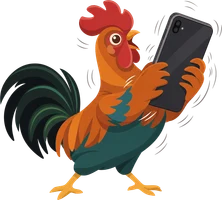
Push-ups, counted by the camera
Raises your heart rate fast, which clears the heavy, foggy feeling just after waking.

Hunt down things you own
You have to walk away from your bed, and a sleepy brain cannot ignore that distance.

Squats, counted by the camera
Uses the largest muscles you have. Once your legs are working, going back to bed is hard.

Sit-ups, counted by the camera
Lifting yourself upright is the movement your body resists most when half asleep.

Shake the phone until the meter fills
Uses your whole arm rather than a thumb, and needs no permission at all.

Dance in front of the camera
The clock only runs while you are actually moving, so you cannot wait it out.

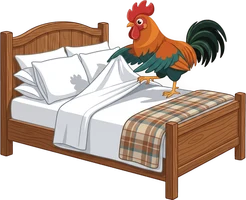
Make your bed and photograph it
The warm place you could fall back into is gone.

Get outside and put a hand on the ground
Daylight sets the internal clock that decides when you feel awake.

Get to a window and photograph the sky
Morning light is the strongest signal your circadian clock gets.
Switch your head on before your thumb can lie for you.

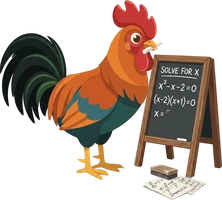
Solve sums until your head is switched on
Sums wake the part of your brain you focus with, which wakes slower than the rest.

Repeat the order the squares flash in
Tap without thinking and the order comes out wrong. Working memory wakes up slowly.

Read a passage out loud to start the day
Your vision, your language and your speech all have to wake up together.

Type out what is on screen
You have to read it, hold it in your head, and type it back exactly.


03The way out
An alarm you can talk your way out of is not a gentler alarm. It is a different product. So each of the obvious escapes has an answer, and none of them is a lecture.
Once you are within 4 hours of the target it is frozen: no retiming, no disabling, no deleting. Changing your mind that close to the morning is just going back on it. The window is yours to set, anywhere from 1 to 12 hours.
Goal lock · on by default
It starts ringing again about two seconds later, and the chain behind it keeps coming: every five seconds for the first two minutes, then every thirty out to ten — with three more waiting further into the hour, in case the room has gone quiet and you have gone back to sleep.
There is exactly one door, and it is not a timer you can stand in front of. A mission that genuinely cannot find you — nothing counted, and the camera saying so for three unbroken minutes — will finally offer you sums instead. Being seen resets the clock. The way out costs more than the way through, which is the point of it.
3 minutes · not offered for Shake
04The night before
Getting up at six is a sleep problem before it is a willpower problem. So Roosta works on the night as well, and it works the night out from the morning rather than asking you to keep two numbers in agreement.
Your bedtime is the alarm minus the sleep you asked for — 8 hours unless you say otherwise, anywhere from 4 to 12. Move a 6:30 alarm to 5:00 and the night moves with it.
From 1 to 5 reminders in the run-up to lights out, as far apart as you like. One is "tell me at bedtime". Five is a countdown.
An evening whose morning has an alarm gets told the time and the mission, because that is the last moment to change either. An evening with nothing set gets asked to set one.
Hand Roosta the ones that cost you the night and it puts a shield over them until the morning is claimed — then holds it 20 more minutes, because being awake and being off your phone are not the same win.
05The sound
Search Apple's whole catalogue by name and set any track as the alarm — no subscription, no account, no third-party app needed. Or bring your own audio file. Or use one of the 8 recordings in the box, from birdsong to a police siren.
Dance is the one mission with an opinion about this, and it only ever offers it: nobody has ever danced to a siren.
06The streak
Your streak is worked out from the mornings themselves every time it is shown, never stored as a number of its own. There is nothing to edit, nothing to drift, and no rank you did not earn this morning.

Burning · 14 mornings
Nothing to switch on and nothing to claim in advance. A morning you sleep through wears a snowflake instead of breaking the run, the freeze is applied afterwards, and the two reset every Monday. Miss a third and the run goes — that is what makes the other two worth anything.
If you are already up before it rings you can say so and keep the morning — but it is off until you turn it on, and the window is a few hours rather than the whole evening. Claiming tomorrow at six tonight is not getting up early.
07Patterns
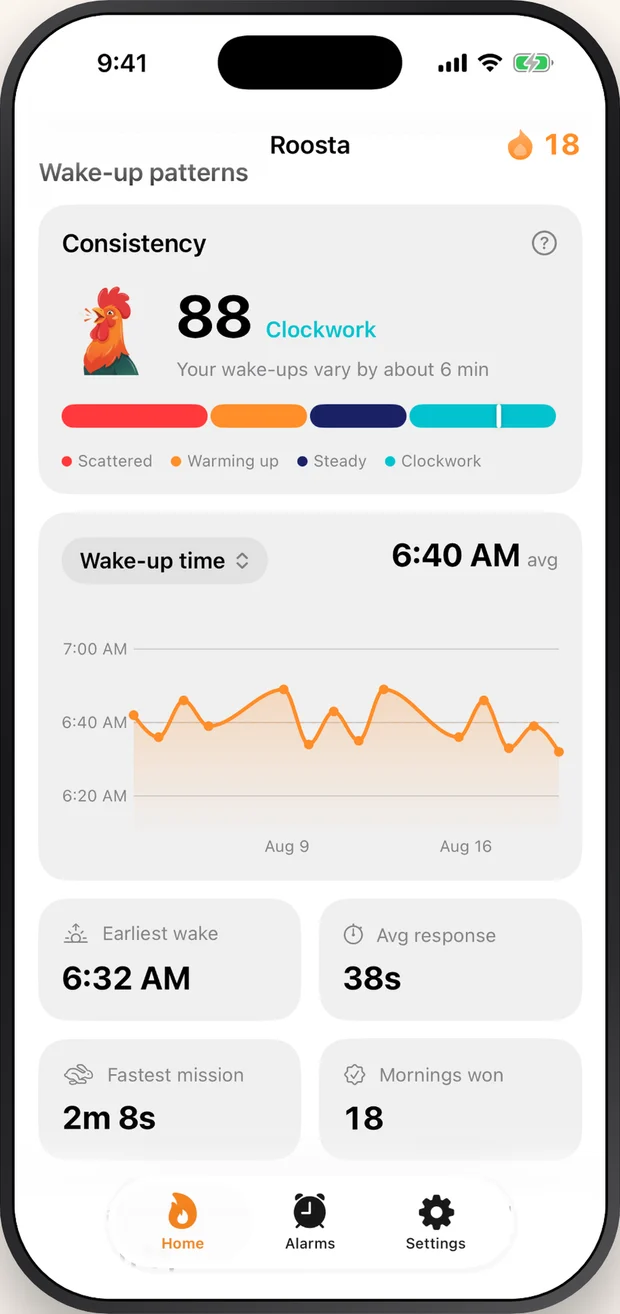
Two questions, and both are arithmetic over mornings that actually happened: when the morning really ended, and how long the mission took once it started. The second is the one that measures you rather than the day — the same mission gets faster as somebody gets better at waking up to it.
There is no score, no index and no figure that cannot be traced back to a morning you either had or did not. A number nobody can check is the same as a number that was made up, and this app has refused those everywhere else.
08Privacy
Reps are counted, dances are watched and photographs are checked by your own phone. Nothing is recorded, nothing is uploaded, and the frame is gone the moment it has been read.
The reading mission transcribes you on the device so it knows you have read the passage. The audio is never recorded and the transcript goes with the screen.
Everything works with no account, forever. One exists only so a new phone does not cost you the run — sign in with Apple or Google, and delete it and everything in it from inside the app.
09Pricing
Roosta is free to download and needs a subscription to work. There is no limited mode, no advertising and nothing to unlock twice — every mission, the shield, the streak and the patterns are all simply in it.
Weekly
Try it for a week
Billed weekly, cancel any time from your store account.
Yearly · 7 days free
Commit to the mornings
A week free for new subscribers, then billed yearly. Far cheaper than the same year bought a week at a time.
Prices are set per country and shown in your own currency on the purchase screen before you confirm anything.
10Questions
None. Roosta has no snooze, no skip, and no button that means "I am awake, trust me". The alarm stops when the mission you chose the night before is finished, and there is no other way to stop it.
It rings again. Walking out of a mission starts the alarm back up within a couple of seconds, and the chain behind it keeps going — every five seconds for the first two minutes, then every thirty seconds out to ten, with three more alarms waiting further into the hour. Deleting the alarm does not help either: it is frozen once you are inside the lock window.
Yes. Roosta does not use a notification to ring, so the alarm does not depend on whether you have allowed them. Notifications are only used for the softer things — bedtime nudges, the evening reminder, and the note before a free trial converts.
Roosta is free to download and needs a subscription to work — there is no limited free mode. It is sold weekly or yearly, and the yearly plan comes with a 7-day free trial for new subscribers. Prices are shown in your own currency on the purchase screen before you confirm.
No. Reps are counted, dances are watched and photos are judged on your own phone, by the phone. Nothing the camera or the microphone captures is uploaded, nothing is recorded, and nothing is kept once the mission has been judged.
Only if you want one. Everything works with no account, forever. An account exists so your alarms, settings and wake-up history come back on a new phone; you can sign in with Apple or Google, and you can delete the account and everything in it from inside the app.
Two mornings a week are protected automatically. The alarm still rings and getting up still counts, but a morning you sleep through wears a snowflake instead of breaking your streak. There is nothing to switch on and nothing to claim in advance — a freeze is applied afterwards, and the two reset every Monday.
Yes. Roosta is on Google Play and the App Store, with the same thirteen missions on both, and one Roosta account carries your alarms and your record between an iPhone and an Android phone.
Any iPhone on iOS 26.1 or later, and any Android phone on Android 10 or later. On iPhone, Roosta is built on the system alarm framework, which is what lets it ring reliably without leaning on notifications.
In your Apple Account settings on an iPhone, or your Google Play subscriptions on Android, like every other store subscription. Turn auto-renewal off at least 24 hours before the period ends and you keep access until it runs out.
Runs on iOS 26.1 and later, and Android 10 and later.